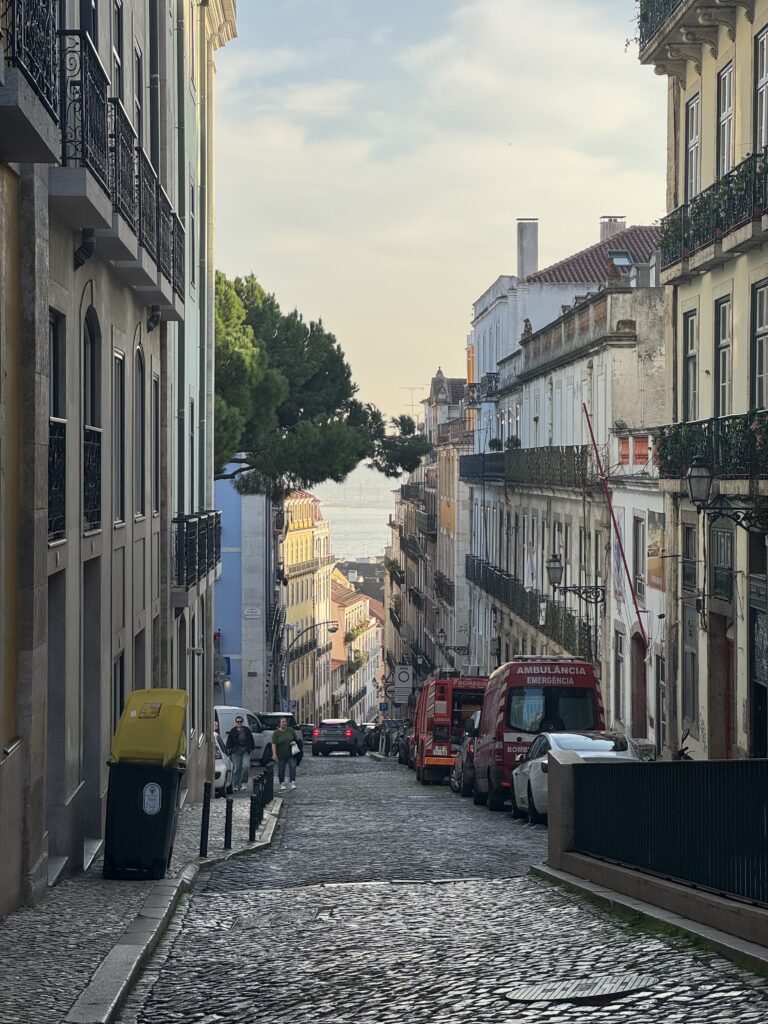
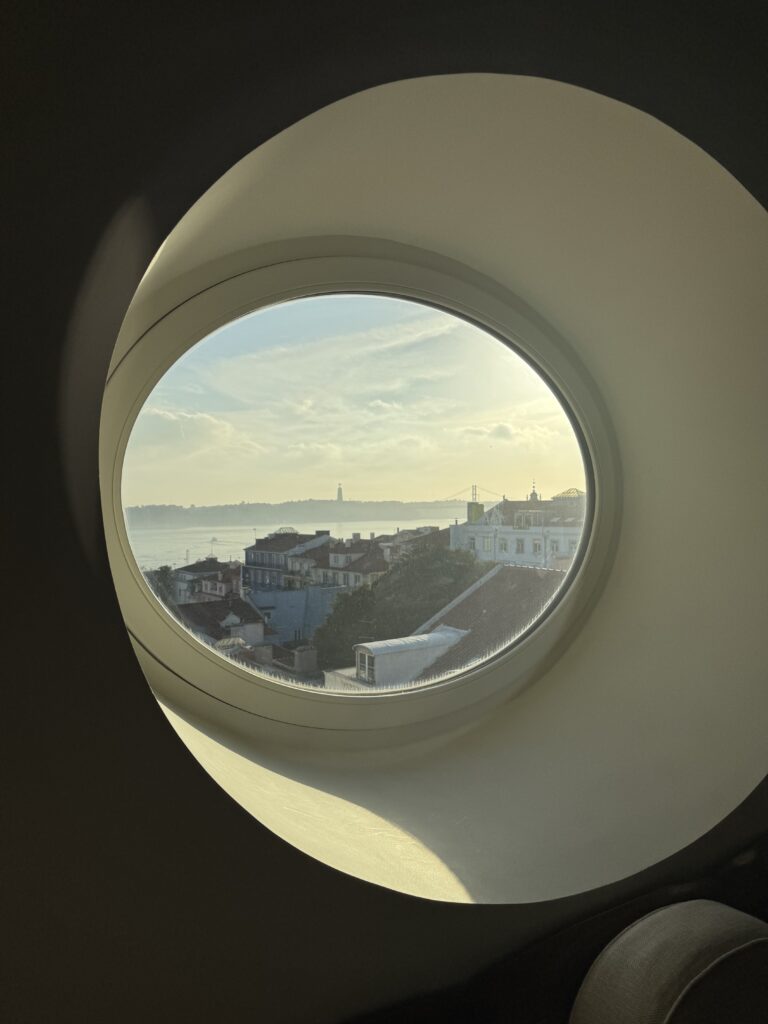
A friend planning a trip to Europe asked me last year what I thought about Lisbon. I told her that no question about it, she had to go. Even though I had only been there once a decade ago, the colorful building facades and unique tiles with majestic glimpses of the water throughout the scenic city had captured my heart. I loved the slower vibes – a well developed city but still retaining the authenticity of a place where the locals held influence. Lisbon was and still is rich with culture and history. Then there was the food – fresh orange juice, silky egg tarts they called pasteis and so much seafood, both fresh and preserved.
When I went back last November, Lisbon had changed in that inevitable way that a growing city does – busy with tourists and steeper prices. However, the best of the city still remained and there is no shortage of ways to spend your time there. Over the course of 5 days, my friend and I enjoyed a roller coaster of a stay – literally rolling up and down the steep curves of the city with our bellies stuffed and our bags full of goodies during the day and our hearts broken by the mournfully beautiful ballads of fado at night.
I’ve done the research so you don’t have to. Read on for my curated guide to Lisbon.

THINGS TO DO
TILE WORKSHOP
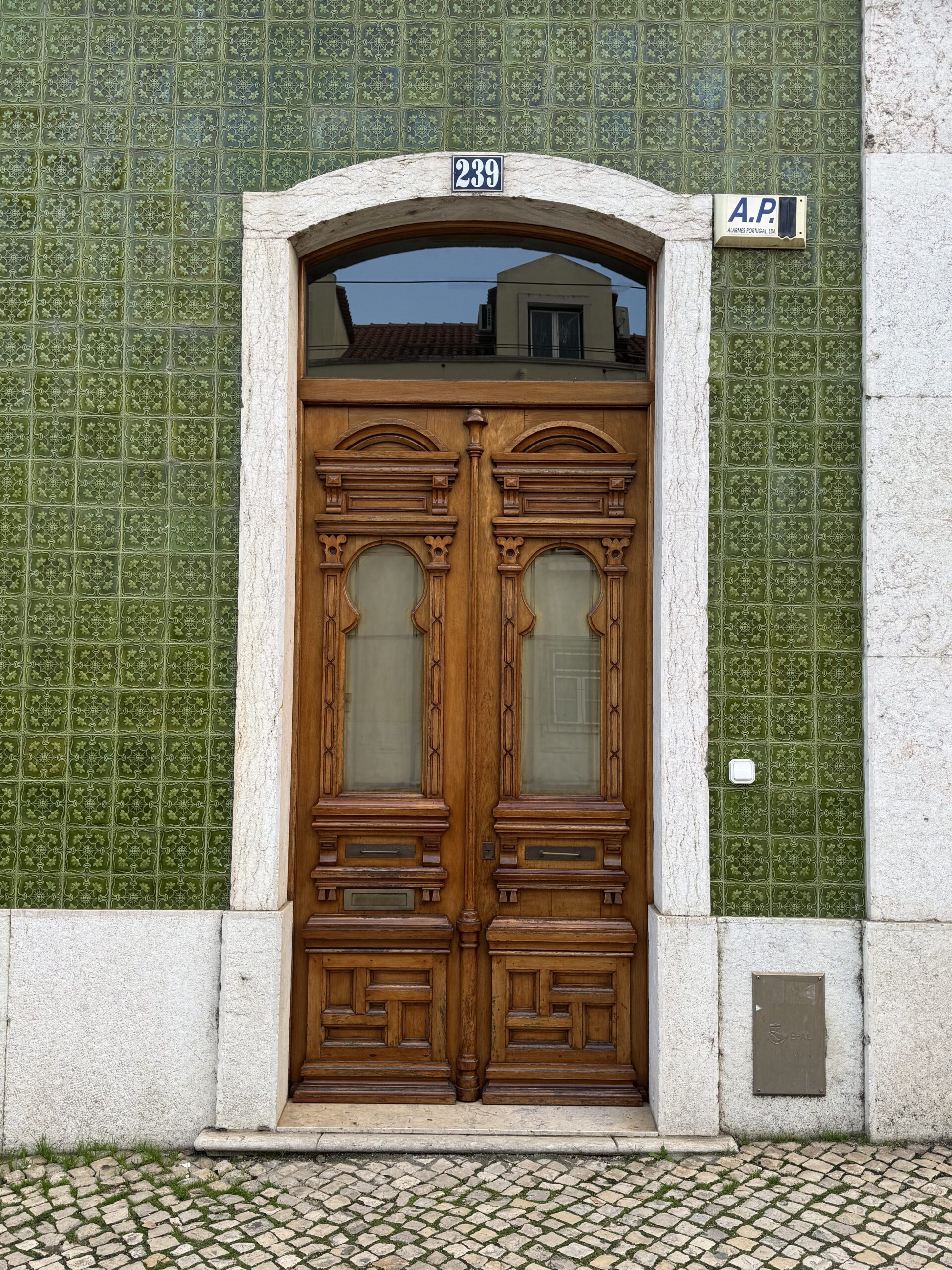
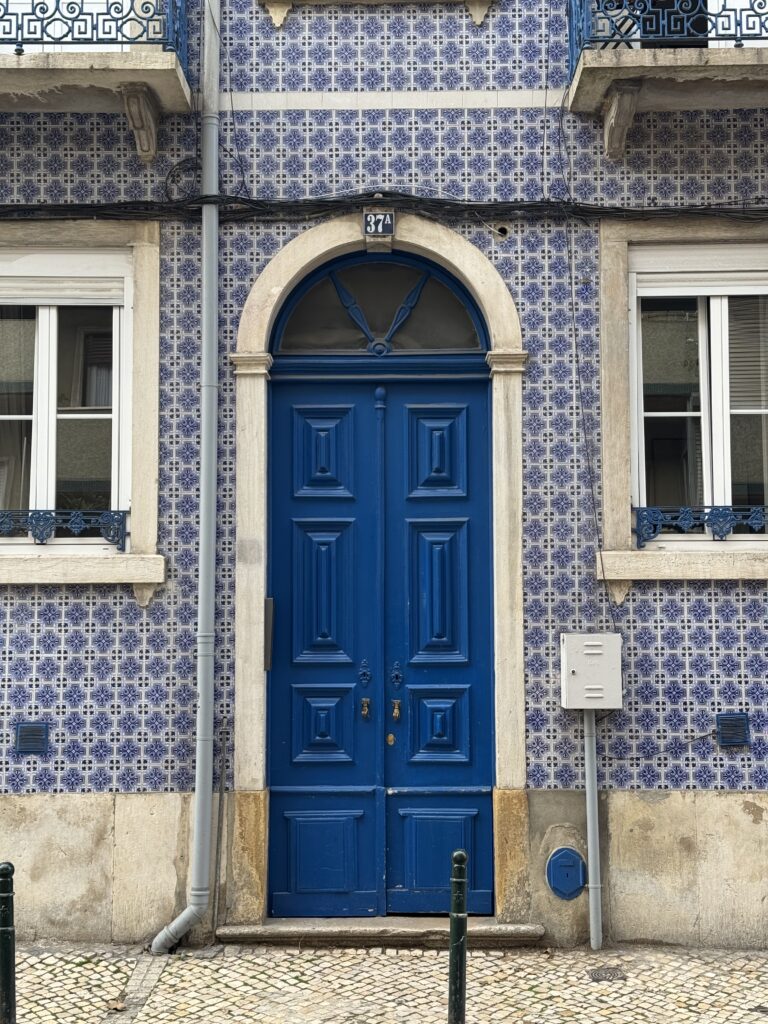
Portugal’s iconic azulejos—intricate hand-painted tiles—are deeply embedded in the country’s culture and history, adorning everything from churches to subway stations.
Cerâmica S. Vicente is a family studio, which has existed for 12 years in the S. Vicente neighborhood in Lisbon. Everything is done manually in the studio, from the tile itself, to the glazing, painting and finally cooking. They also offer tile workshops in another space a couple doors down.
Lisbon has many studios offering workshops but I really liked S. Vicente’s portfolio of commissioned projects. They have 2 types of workshops – a basic one 2 hours long where you paint the tiles and one that is 3.5 hours where you learn to open a print by hand. The classes are taught by Miguel, son of the studio founder and an artist in his own right who is fluent in English.
Notes:
- Highly recommend booking in advance (though you can pay day of) as classes are small and fill up quick.
- The painted tiles takes about 3 days to cook and you can pick them up from the studio or arrange for shipment.
FADO
Fado is a traditional Portuguese style of singing and music that is known for its melancholic and expressive quality. The exact origins are not known but it appeared in Lisbon in the 19th century and was quickly embraced by the working class, especially the wives of sailors who would gather to commiserate about their often absent husbands and the hard life of a poor housewife. Basically the very opposite of a love song. Fado is performed by solo singers and accompanied by one or two string instruments.
You can find the music mostly at restaurants, pub and cafes with performances starting later in the evening. Lisbon, being the home of fado, has plenty of options but it may be best to avoid the touristy areas if you’re looking for a more authentic experience.
O Corrido is a family run traditional Fado House in a historic building next to the National Pantheon. The 55 euro cover charge is for the menu and the show – drinks are charged separately. The menu includes the couvert (bread and olives), one starter, one main and one dessert – the latter three you get to choose from a wide selection. The food was surprisingly really good and served in courses between fado performances. The owner speaks English fluently and acts as both host and musician playing the Portuguese guitar. He gave a great introduction to fado and made sure to speak with every table with his wife and daughter performing fado alongside a rotation of other singers.
Notes:
- Reservations are required through their website (make sure to include your country code) and don’t be surprised if you don’t get a confirmation until 2 weeks from the day.
- Performances are much later in the evening so eat a snack before you go. The first 2 courses come quickly but there are long waits for the subsequent ones to align with the performances. The first performance starts around 9pm with the last performance around 11pm.
TRAMS
No visit to Lisbon is complete without riding its iconic yellow trams. These charming vehicles traverse narrow, winding streets, offering a glimpse of the city’s rich history and stunning vistas. Each tram route has its own charm, catering to different parts of the city.
- E28: The most popular route, taking you through Alfama, Graça, and Baixa. Be prepared for crowds, especially during peak hours. I would suggest going with E12 instead unless you can get up at sunrise.
- E15: This tram connects central Lisbon to the historic district of Belém, where you can explore landmarks like the Jerónimos Monastery and Belém Tower.
- E12: A quieter option, this one-directional loop offers a similar scenic section as E28 but with fewer passengers.
THINGS TO SEE
VIEWS
Miradouro de São Pedro de Alcântara
A visit to this scenic viewpoint promises breathtaking panoramas of Lisbon’s hills and rooftops. Nestled in the Bairro Alto neighborhood, this landscaped terrace is a perfect spot to soak in the city’s charm, with views extending to landmarks like Castelo de São Jorge. The relaxed atmosphere makes it an ideal stop for photos or a leisurely coffee at nearby kiosks.
Notes:
- Accessible via the Glória Funicular for a fun ride or a quick (but bit steep) walk from the Praca de Luis de Camoes.
- Great for sunset views or a quiet morning before exploring the bustling Bairro Alto.

This iconic neo-Gothic elevator offers not only a unique way to traverse Lisbon’s steep streets but also a stunning vantage point from its viewing platform. Linking the Baixa district to the Carmo Convent, the lift is a marvel of 19th-century engineering.
Notes:
- There is a fee to take the lift and often a long queue at the entrance on Rua de Aurea, you can easily avoid this by accessing the top of the lift from Rua de Dom Pedro de Menezes, beside the Museu Arqueológico do Carmo.
- The view from the top is especially enchanting at dusk as it offers a great view as the lights turn on at the Castelo de São Jorge.
Cais das Colunas and Praça do Comércio
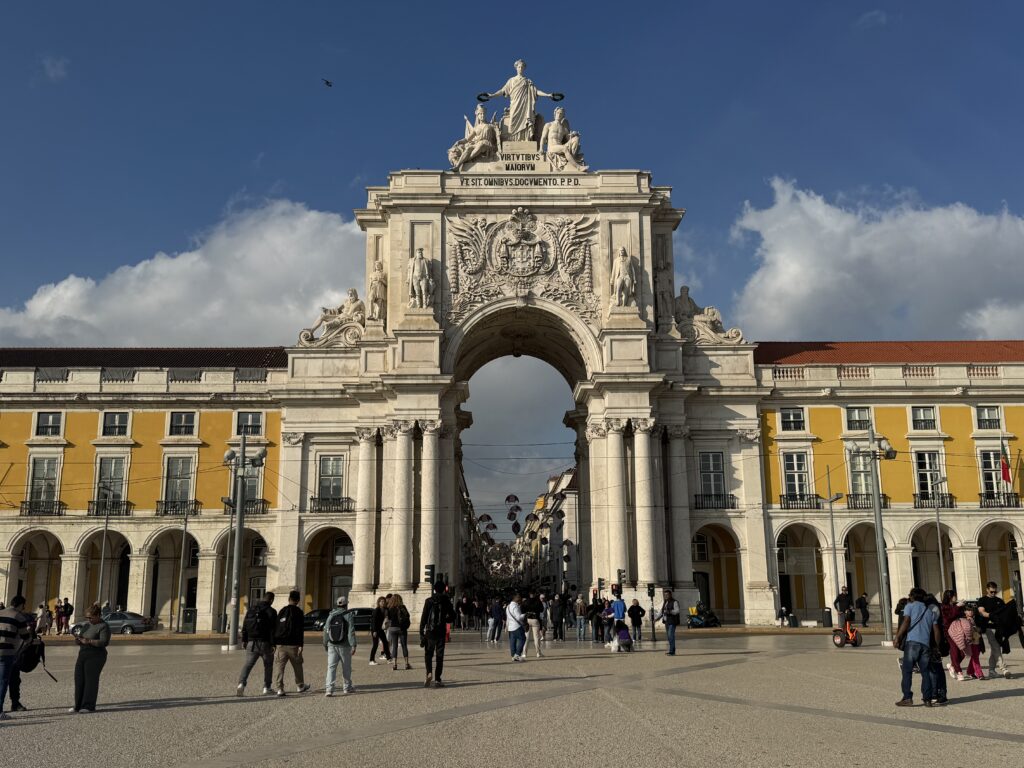
Step back into Lisbon’s maritime past at Cais das Colunas, where ships once docked to enter the city. Framed by the grand Praça do Comércio, this waterfront area offers sweeping views of the Tagus River and a perfect spot to enjoy the sun.
Notes:
- Perfect for a leisurely stroll or to admire the cityscape.
- Great spot for photos, especially during golden hour.
MUSEUMS
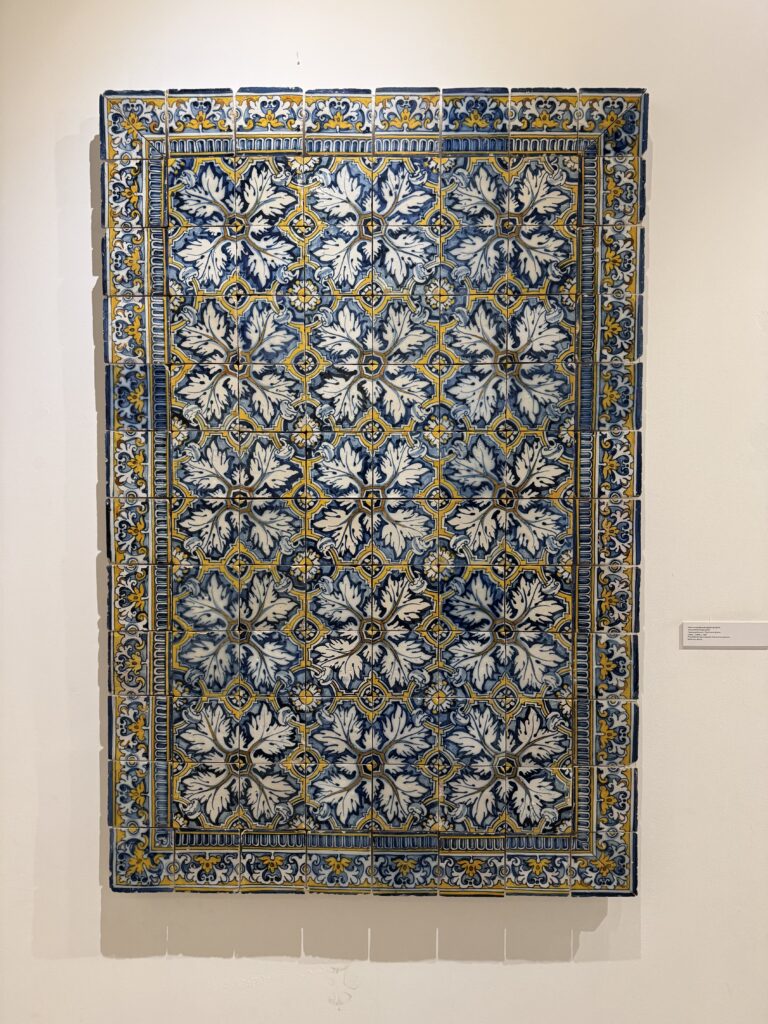
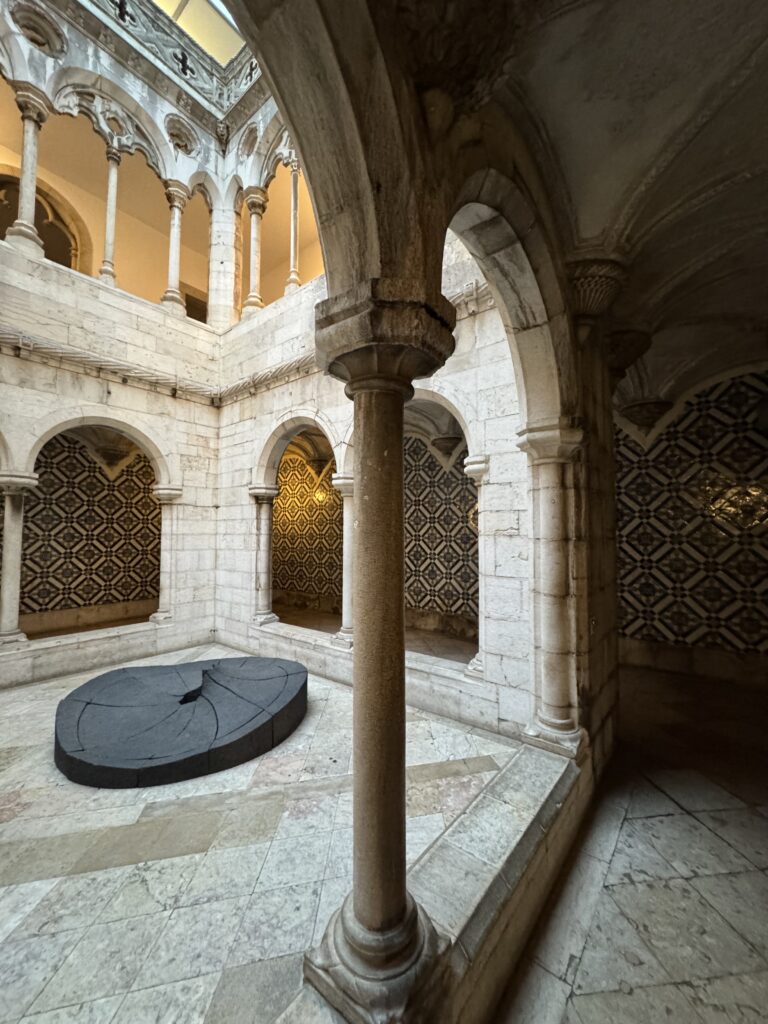
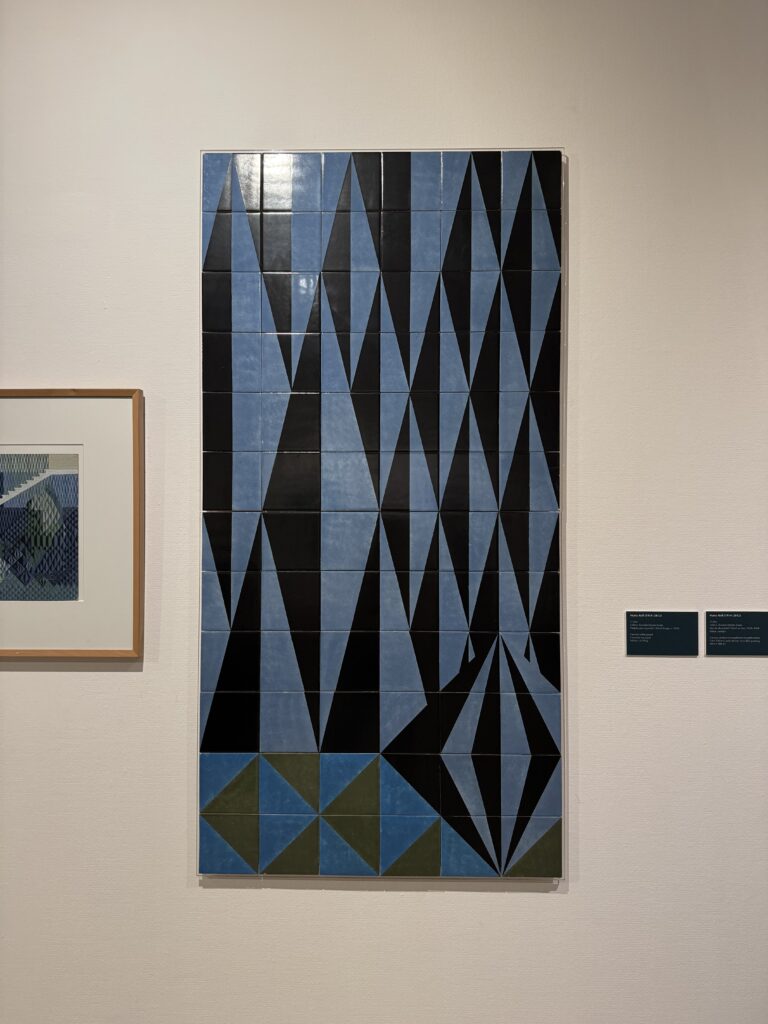
Dive into the history and artistry of Portuguese azulejos at the National Tile Museum. Housed in a former convent, this museum chronicles the evolution of tile-making, showcasing vibrant pieces from the 15th century to modern times.

Notes:
- Don’t miss the incredible panoramic tile mural of Lisbon before the 1755 earthquake.
- The stunning church on the ground floor hosts live music concerts for free – check for performances.
- A quiet, off-the-beaten-path gem for history and art enthusiasts.
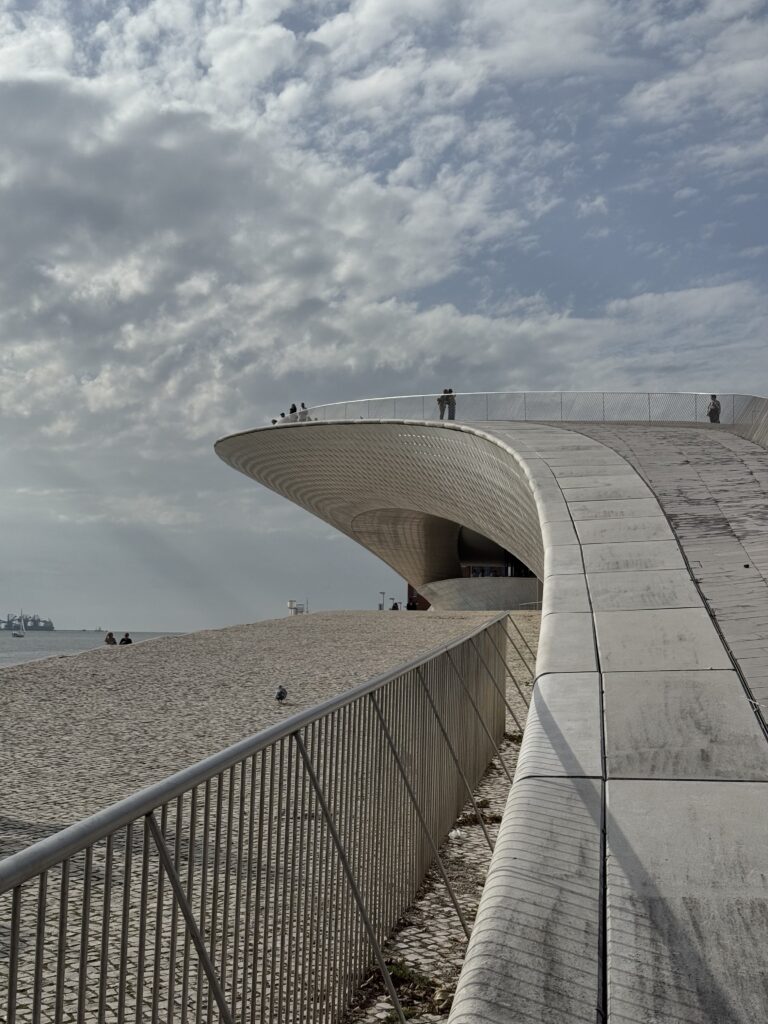
MAAT (Museum of Art, Architecture, and Technology)
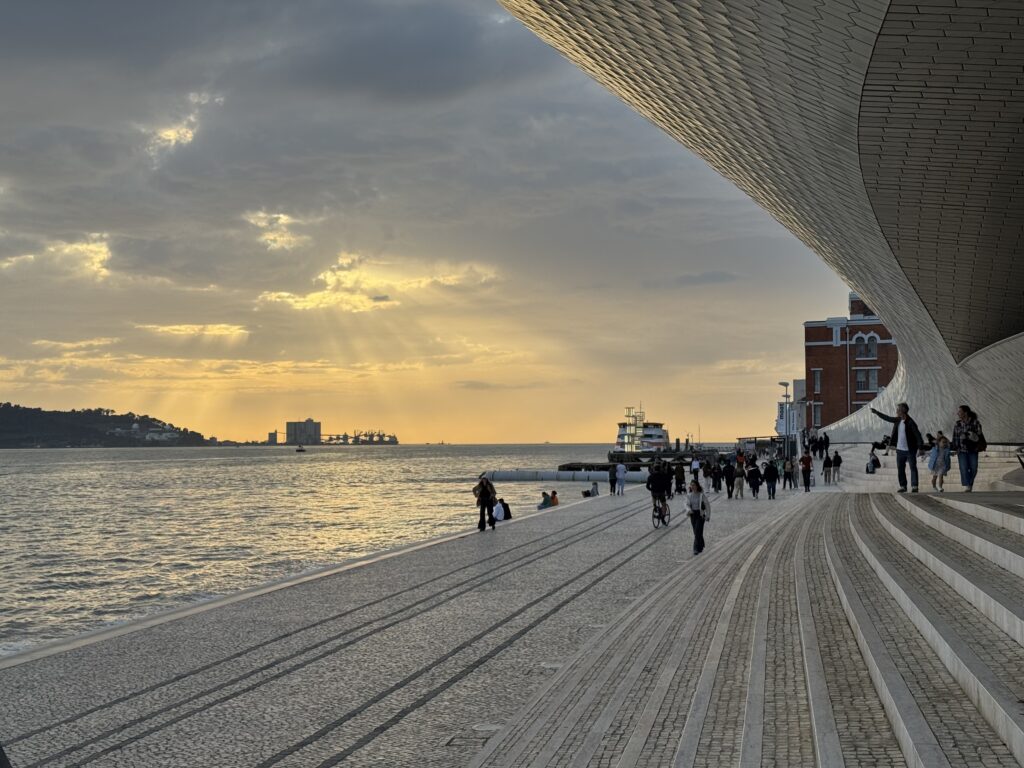
Set along the waterfront, MAAT combines cutting-edge design with thought-provoking exhibitions on art and innovation. The museum’s futuristic architecture is a draw on its own, with a rooftop terrace offering stunning river views.
Notes:
- Museum restaurant serves delicious food with a great view—show your ticket for a discount and grab a seat on the terrace if weather permits.
- Best enjoyed on a sunny day to relax by the river or atop the museum steps.
Perched atop one of Lisbon’s highest hills, Castelo de São Jorge is a must-see for its historical significance and panoramic views. This medieval castle offers a glimpse into Lisbon’s Moorish past and is perfect for history buffs and photographers alike.
Notes:
- Guided tours in English (“Discovering the Castle”) are included with the entrance fee, subject to availability.
- Try to visit on a clear day to make the most of the views.
A masterpiece of Manueline architecture, the Jerónimos Monastery stands as a testament to Portugal’s Age of Discovery. This UNESCO World Heritage site is a architectural fairytale of limestone lacework and maritime glory. As you wander through its cloisters—an intricate maze of arches and carvings—you’ll be amazed by the craftsmanship that blends Gothic drama with delicate Renaissance finesse. The church’s vaulted ceiling seems to defy gravity, and sunlight streaming through stained glass creates a kaleidoscope of color across the hallowed halls.
Notes:
- Arrive early to avoid long lines, especially in peak seasons.
- Pair with nearby attractions like the MAAT and Pastéis de Belém bakery.
Step into Portugal’s royal history at the Palácio Nacional da Ajuda. This neoclassical palace was once the residence of Portuguese monarchs and now showcases opulent rooms, stunning art, and regal furnishings.
Notes:
- Highlights include the Throne Room and the Royal Dining Hall.
- Guided tours enhance the experience, shedding light on the palace’s fascinating history.